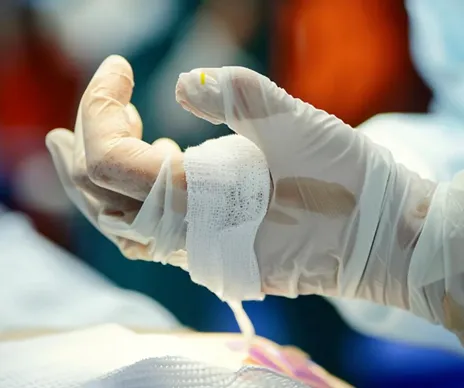
Complex Chronic Wound Care in DC Metro
Complex Chronic Wound Care in DC Metro

Complex chronic wounds are skin injuries that don’t progress through normal healing and can persist for weeks or months because of factors like underlying disease, poor blood flow, infection, or repeated pressure. This page explains what these wounds are, the common types we see, and evidence-based care pathways that improve outcomes for arterial ulcers, venous ulcers, diabetic foot ulcers, and pressure injuries in the DC Metro area. You’ll find practical diagnostic steps, prevention tips, and clear guidance on when to consider advanced options such as negative pressure wound therapy or bioengineered skin substitutes. Throughout, we highlight multidisciplinary workflows and straightforward next steps so patients and caregivers understand assessment, treatment sequencing, and likely outcomes. Below we map key clinical topics: wound definitions and types, diabetic foot ulcer pathways with local access guidance, arterial versus venous ulcer management, advanced wound-healing solutions, prevention and red-flag guidance, and reasons to consider care at a local specialist clinic. Each section uses side-by-side comparisons, actionable lists, and clinical tables to support timely decision-making and referral.
What are complex chronic wounds and which types are common?
A complex chronic wound is one that does not progress through the expected healing phases within a typical timeframe—often persisting beyond four weeks despite basic care. These wounds arise when local tissue injury is compounded by systemic problems such as diabetes, peripheral artery disease, prolonged pressure, or venous hypertension. Accurate classification is the first clinical step because knowing the wound type shapes diagnostics and treatment priorities. The sections that follow define diagnostic thresholds and list the common wound types treated in specialist clinics to guide care planning.
How do we define a complex chronic wound?
We call a wound complex and chronic when it fails to move through the normal healing stages—hemostasis, inflammation, proliferation, and remodeling—within an expected window, usually beyond four weeks even with appropriate basic measures. Contributing systemic factors include poor perfusion from peripheral arterial disease, diabetic neuropathy and high blood sugar, venous insufficiency with chronic edema, and immune suppression or persistent infection that stalls repair. Look for red flags such as increasing wound size, deeper tissue involvement, a foul odor, systemic signs of infection, or pain that changes with position or activity. These findings prompt escalation from primary care to specialized wound assessment and targeted interventions.
Which chronic wound types do we treat?
Specialized wound programs commonly manage arterial ischemic ulcers, venous leg ulcers, diabetic foot ulcers, and pressure-related injuries—each with distinct features and treatment priorities. Arterial ulcers are often painful, distal, and associated with weak pulses; venous ulcers typically appear on the gaiter area with swelling, hemosiderin staining, and moderate drainage. Diabetic foot ulcers combine sensory loss and vascular compromise, increasing infection and limb-loss risk; pressure injuries develop over bony prominences from sustained force and decreased perfusion. Correctly classifying the wound helps clinicians choose among revascularization, compression, offloading, debridement, and biologic or advanced options.
How is diabetic foot ulcer care provided in Rockville, MD?

Care for diabetic foot ulcers (DFUs) requires a coordinated pathway that identifies neuropathy and ischemia, treats or prevents infection, redistributes pressure, and optimizes the wound bed to promote healing and avoid amputation. Local diagnostic steps include a focused foot exam, vascular testing such as ankle–brachial index or Doppler studies, and targeted imaging or labs when infection is suspected. Effective management combines offloading, serial debridement, appropriate antimicrobial therapy when needed, and advanced dressings or referral for revascularization as indicated. The table below summarizes common DFU interventions, when they’re used, and what patients typically need to participate in each approach.

This table underscores that DFU care is multimodal and often iterative; each therapy is chosen based on wound features and perfusion status. Next we review common causes and diagnostic red flags so patients and clinicians know when rapid escalation is needed.
What causes diabetic foot ulcers and how are they diagnosed?
Diabetic foot ulcers result from the combination of peripheral neuropathy, which reduces protective sensation, and peripheral arterial disease, which limits blood flow—often together with repetitive pressure or minor trauma that breaks down skin. Diagnosis begins with a structured risk assessment: monofilament sensory testing, pulse evaluation, skin inspection, and perfusion measurement with ankle–brachial index or Doppler when arterial disease is suspected. Infection is assessed by clinical signs (redness, warmth, purulence) plus laboratory tests and imaging when deep infection or osteomyelitis is a concern. Red flags such as fever, spreading cellulitis, worsening pain, or absent pulses require urgent referral and may shift care toward systemic antibiotics or surgical evaluation.
What comprehensive treatments are available for diabetic foot ulcers?
A comprehensive DFU plan prioritizes offloading to remove mechanical stress, serial debridement to create a healthy wound bed, targeted infection control, and dressings or advanced modalities that support granulation and re-epithelialization. Offloading options range from removable devices to cast-based solutions for plantar ulcers; patient adherence to offloading is a major factor in healing. Debridement methods—sharp, enzymatic, or autolytic—are chosen based on wound condition and patient tolerance, while antimicrobial therapy follows cultures and clinical severity. If ischemia limits healing, prompt vascular assessment and possible revascularization are critical before attempting soft-tissue reconstruction or grafting.
We aim to nurture patients and make clinic visits easy, while clearly explaining the services we provide.
For patients in the DC Metro area seeking local care, Dinkum Prospect Healthcare provides coordinated DFU assessment and treatment with a patient-forward approach. Our pathway is designed to ensure timely evaluation, collaborative planning, and clear next steps for appointments and follow-up care.
What are the best treatment options for arterial and venous ulcers?
Arterial ulcer treatment centers on restoring blood flow, protecting ischemic tissue, and reducing vascular risk—revascularization when feasible is often key.
Venous ulcer management focuses on compression therapy, limb elevation, and exercise to improve calf‑pump function, along with wound bed preparation.
Common measures for both include infection control, regular debridement when appropriate, and optimization of nutrition and chronic disease management (glycemic and cardiovascular risk control).
The next table compares arterial and venous ulcer therapies, typical indications, and expected outcomes for quick clinical reference.

This comparison highlights that arterial ulcers often need vascular intervention for meaningful healing, while venous ulcers typically respond to consistent compression and edema management. Diagnostic testing guides these clinical choices.
How are arterial ulcers identified and treated?
Arterial ulcers often cause severe pain—especially at rest or with elevation—along with cool, pale skin and weak distal pulses, and they’re commonly found on toes or the lateral foot. Diagnostics include ankle–brachial index, toe pressures, and duplex ultrasound to localize disease and assess the potential for revascularization. Treatment focuses on restoring perfusion via endovascular or surgical revascularization when appropriate, protecting the wound from further trauma, and using low‑adhesive dressings that maintain a moist but not overly exudative environment. Long‑term measures—smoking cessation, glycemic control, and antiplatelet therapy—support limb preservation and lower recurrence risk.
What are effective strategies for managing venous leg ulcers?
Venous leg ulcer care focuses on reducing venous hypertension through correctly applied graduated compression, addressing superficial or deep venous disease when necessary, and managing edema with elevation and exercise. Because compression is contraindicated in severe arterial disease, vascular assessment precedes routine compression. Adjuncts include multilayer dressings for exudate control, structured exercise to strengthen the calf pump, and patient education on skin care to prevent recurrence. Long‑term maintenance with compression hosiery, weight management, and active mobility significantly reduces recurrence.
Venous ulcers: diagnosis, risk factors, and healing prognosis
Venous ulcers are the most common chronic lower‑extremity ulcers, affecting roughly 1% to 3% of people in the United States. Venous hypertension—due to reflux or obstruction—is the main mechanism driving ulcer formation. Risk factors include age over 55, family history of chronic venous insufficiency, higher body mass index, history of pulmonary embolism or DVT, lower‑extremity joint or skeletal disease, physical inactivity, prior ulcers, severe lipodermatosclerosis, and deep venous reflux. Poor prognostic signs for healing include ulcer duration beyond three months, initial ulcer length ≥10 cm, coexisting arterial disease, older age, and higher BMI. On exam, venous ulcers are often shallow and irregular with well‑defined borders.
Venous ulcers: diagnosis and treatment, 2019
Which advanced wound‑healing solutions improve chronic wound recovery?

Advanced therapies are valuable when standard measures don’t produce healing because they address microenvironment barriers like poor perfusion, high bioburden, or a deficient extracellular matrix. Negative pressure wound therapy (NPWT) promotes granulation and reduces edema, bioengineered skin substitutes supply scaffolds and growth factors to help tissue regenerate, and hyperbaric oxygen therapy can enhance oxygenation for select ischemic or infected wounds. Choosing the right advanced option depends on a careful wound assessment, prior treatment response, and patient comorbidities. The table below summarizes mechanisms, benefits, and typical candidates to aid selection.

Negative pressure wound therapy (NPWT) promotes healing by applying uniform subatmospheric pressure across the wound surface. The system typically uses a foam dressing, a semi‑occlusive seal, and a fluid collection canister. Benefits come from macro‑ and micro‑deformation of tissues, removal of proinflammatory fluids, and stabilization of the wound environment. Complications are uncommon but can include bleeding, infection, fistula formation, or pain, so careful monitoring is essential. New NPWT variations—such as NPWT with instillation (NPWTi‑d) and refined cleansing protocols—have broadened its clinical uses across diabetic foot ulcers, pressure injuries, chronic wounds, and graft management.
Negative pressure wound therapy: mechanism of action and clinical applications, T Safran, 2021
We aim to nurture patients, encourage appropriate clinic visits, and clearly explain the healthcare services we provide.
This table shows that advanced therapies are adjunctive—chosen after optimizing modifiable factors. The sections below describe NPWT and biologics in more detail so you can understand expected benefits and outpatient logistics.
How does negative pressure wound therapy support healing?
NPWT applies controlled subatmospheric pressure to the wound bed to evacuate fluid, lower interstitial edema, improve perfusion, and generate microdeformational forces that stimulate cellular proliferation and granulation. NPWT is especially useful for wounds with heavy drainage, large surface defects, or when assisted closure is desired. It can be used in outpatient settings with portable devices. Practical considerations include obtaining an effective seal, monitoring for bleeding or infection, and scheduling regular dressing changes and clinic reviews to track progress. Properly selected patients often experience faster granulation and fewer dressing changes over time.
What role do bioengineered skin substitutes and advanced dressings play?
Bioengineered skin substitutes act as scaffolds that deliver matrix components, growth factors, or viable cells to a stalled wound—helping re‑epithelialization when basic measures have not worked. Advanced dressings (absorbent foams, alginates, antimicrobial‑impregnated products) are matched to exudate levels and infection risk to maintain a moist healing environment and manage bioburden. Product choice depends on wound depth, presence of infection, exudate amount, and perfusion; multidisciplinary discussion helps align therapy with likely benefit. When used appropriately, these options can shorten healing time and reduce the need for larger surgical reconstruction.
Bioengineered skin substitutes for advanced wound management
Skin substitutes include a range of biological, synthetic, and biosynthetic materials used to support wound healing and closure, serving as temporary or permanent aids to the natural repair cascade.
Bioengineering skin substitutes for wound management—perspectives and challenges, M Deptuła, 2024
How can patients prevent chronic wounds and reduce recurrence?
Prevention focuses on addressing modifiable systemic risks, practicing daily skin and foot care, using proper footwear and offloading strategies, and catching early skin breakdown before it progresses. For people at higher risk—those with diabetes, venous insufficiency, or limited mobility—regular inspection, moisturizing (avoiding moisture between toes), nail care, and protective footwear reduce the chance of new wounds. Good nutrition, glycemic control, smoking cessation, and regular activity to promote circulation are foundational systemic measures that support local care. Below are practical self‑care steps and red flags that should prompt timely specialist referral.
Inspect skin and feet regularly to spot early changes and seek prompt care.
Use appropriate footwear and orthotic support to minimize pressure points and shear.
Manage chronic conditions such as diabetes and venous disease consistently to lower wound risk.
Which lifestyle and self‑care practices reduce wound risk?
Daily routines for people at increased risk include a once‑daily foot inspection, gentle cleansing and moisturization (avoiding excess moisture between toes), and well‑fitting shoes that reduce pressure and friction. Adequate protein, vitamins, and hydration support tissue repair; maintaining blood sugar control and avoiding tobacco improve microvascular circulation and healing capacity. Mobility and graded exercise boost calf‑pump function and venous return—especially important for venous disease. Combined, these practices reduce skin breakdown and complement clinical prevention taught by wound care teams.
When should you see a wound care specialist?
Seek specialist evaluation when a wound shows no improvement after roughly four weeks of basic care, when signs of infection appear, or if there is severe or changing pain, spreading redness, or systemic symptoms like fever. Other red flags include loss of pulses, rapid increase in wound size, exposed tendon or bone, and persistent drainage despite dressing changes; these situations need urgent assessment. Early specialist involvement allows timely diagnostics—vascular studies, imaging, cultures—and targeted therapies that can prevent complications. Acting promptly improves outcomes and lowers the risk of hospitalization or limb loss.
Why choose Dinkum Prospect Healthcare for complex chronic wound care in DC?
Dinkum Prospect Healthcare provides integrated primary, wound, and mental health services for residents and visitors in Rockville, MD, and the DC Metro area. Our care is led by Dr. Motunrayo Adegorusi and delivered with a patient‑centered, compassionate approach. We emphasize continuity—coordinating vascular assessments, serial debridement, offloading strategies, and evaluation for advanced therapies—to streamline healing pathways and avoid fragmented care. Our team focuses on clear education, shared decision‑making, and defined next steps at every visit to improve adherence and outcomes while supporting patients through complex plans. As part of this mission, the clinic seeks to nurture patients, encourage appropriate clinic visits, and provide clear information about available services.
What expertise does Dr. Motunrayo Adegorusi bring to wound care?
Dr. Motunrayo Adegorusi heads the clinic’s wound care program within an integrated practice model that blends primary care with wound‑focused assessment and management. This ensures systemic contributors—like diabetes and vascular disease—are addressed alongside local wound therapy. Dr. Adegorusi emphasizes compassionate, patient‑centered coordination among specialists and allied health clinicians to create individualized plans that match patient goals and clinical needs. That coordination supports timely referrals for vascular procedures, advanced therapies, or surgical input and ensures longitudinal follow‑up to reduce recurrence. Patients benefit from a clear care pathway and consistent oversight throughout recovery.
How does our patient‑centered approach improve healing outcomes?
Our patient‑centered model combines education, shared decision‑making, and practical supports—clear instructions for offloading, dressing changes, and when to contact us—to improve adherence and healing. Integration with primary and mental health services addresses comorbidities and psychosocial factors that can slow recovery, such as diabetes management, medication optimization, and behavioral support. Regular follow‑up and care coordination reduce fragmentation and enable timely escalation to advanced therapies when wounds stall, which can shorten healing time and lower complication risk. By pairing clinical expertise with clear communication and accessible scheduling, we aim to improve both short‑term healing and long‑term prevention.
If you need to schedule or ask about wound care services, call the clinic at (240) 559-4838 to discuss appointment options and next steps.
Our structured visits include a focused assessment, coordination of diagnostics, and an individualized care plan aligned with your needs.
For patients traveling across the DC Metro area, we coordinate with local specialists and services to maintain continuity of care.
Frequently Asked Questions
What are the signs that a chronic wound is infected?
Signs of infection include increased redness, warmth, swelling, rising pain, foul odor, or pus. Systemic symptoms—fever, chills, or general unwellness—can indicate a more serious infection. If you notice any of these signs, seek medical attention promptly because untreated infections can lead to complications, including sepsis or the need for surgery.
How can nutrition impact wound healing?
Nutrition is essential for repair. Adequate protein supports collagen formation, while vitamins A and C, zinc, and proper hydration help cellular function and immunity. Malnutrition slows healing and raises infection risk. We encourage a balanced diet with lean proteins, fruits, vegetables, and whole grains to support recovery.
What role does patient education play in wound care?
Patient education empowers people to participate in their healing. Knowing how to perform wound care, recognize infection signs, and follow treatment plans improves outcomes. Education also covers lifestyle changes—nutrition, blood sugar control, and smoking cessation—that enhance healing. A collaborative relationship between patients and providers promotes adherence and reduces complications.
When is surgical intervention necessary for chronic wounds?
Surgery may be needed when conservative care fails or when there is significant tissue loss, infection, or necrosis. Procedures like debridement, skin grafting, or revascularization can restore blood flow and remove nonviable tissue. A wound care specialist evaluates the wound and overall health to determine whether surgery is appropriate.
What are the benefits of multidisciplinary care in wound management?
Multidisciplinary care brings together clinicians, nurses, dietitians, and therapists to address the many factors that affect healing. This team approach ensures thorough assessment and tailored treatment that consider nutrition, mobility, and underlying conditions. Integrating expertise improves healing outcomes and lowers complication risk.
How can patients monitor their wounds at home?
At home, inspect the wound regularly for changes in size, color, or drainage and watch for signs of infection like increased redness or warmth. Keep a record of changes, pain levels, or new symptoms to share with your care team. Follow prescribed routines for dressing changes and offloading to support effective home monitoring and management.
Conclusion
Complex chronic wound care requires timely assessment, targeted treatment, and preventive strategies to avoid complications. By recognizing wound types and following evidence‑based treatment pathways, patients and caregivers can make informed choices that improve recovery. Dinkum Prospect Healthcare is committed to delivering comprehensive, patient‑centered care tailored to each person’s needs. Contact us to learn more about our services and how we can support your healing journey.
